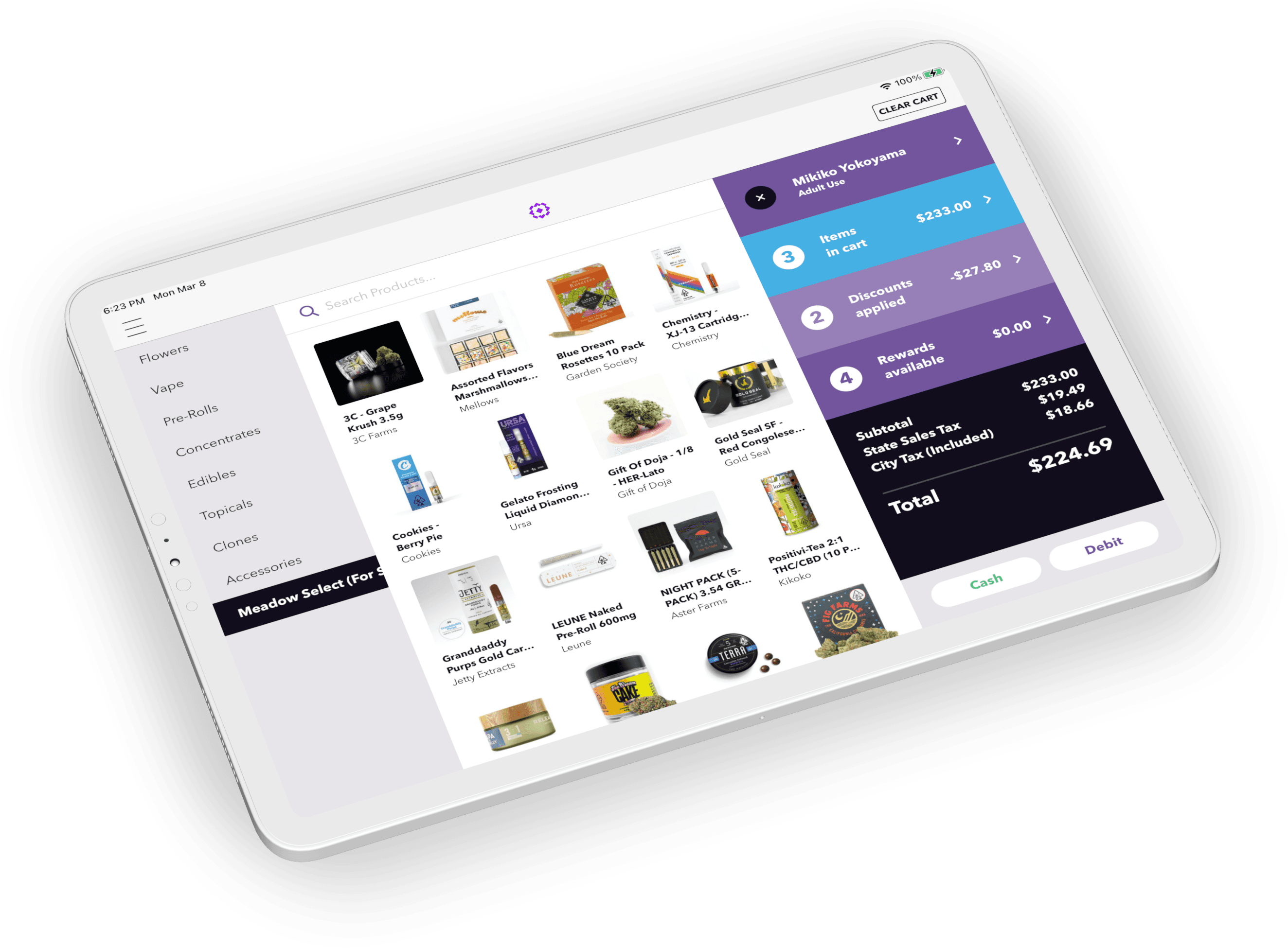

Massachusetts opened adult-use sales in November 2018 and has spent the years since building one of the largest cannabis markets on the East Coast. Cumulative adult-use gross sales passed $9 billion in February 2026, per the Cannabis Control Commission, and 2025 set an annual record at $1.65 billion. It is also a market where prices have compressed hard: 46.3 million transactions in 2025, up 3.4 million from 2024, while total sales grew only modestly.
That combination is the whole story for a 2026 entrant. Demand is proven and the licensing path is well-worn, so the advantage no longer comes from getting in early. It comes from opening with systems that hold up on a thin margin.
The Short Version: You apply to the Cannabis Control Commission for a Marijuana Retailer license, but the real gating step is local: a Host Community Agreement with the municipality where you plan to operate. Expect several months to a year or more, and budget several hundred thousand dollars to $1 million or more all-in. One item to have on your radar before you commit capital this fall: Question 8 on the November 3, 2026 ballot would repeal the adult-use framework, covered below. Then spend most of your energy on the part the license does not cover, which is the operation you run on day one.
This guide covers the licensing requirements in brief, then the systems that actually determine whether your store works: security and SOPs, your POS and Metrc stack, hiring and training, your website and menu, delivery, integrations, and the operating habits that protect margin in a mature market.
In This Post
- Understand Massachusetts Cannabis Licensing Requirements
- Develop a Security Plan, Store Layout, and SOPs
- Choose a Cannabis POS Built for Massachusetts Compliance
- Hire and Train a High-Performing Team
- Launch Your Website and Online Menu
- Build Delivery Into the Plan From the Start
- Streamline Operations With API Integrations
- Market Your Dispensary Within Massachusetts Ad Rules
- Set Your Dispensary Up for Long-Term Success in Massachusetts
- Massachusetts Dispensary FAQs

Understand Massachusetts Cannabis Licensing Requirements
Massachusetts runs a document-heavy process with one distinguishing feature: the municipality, not the state, is usually the gate. Everything below moves faster once you understand that sequence.
Who Regulates Cannabis in Massachusetts
The Cannabis Control Commission (CCC) handles licensing, regulations, enforcement, and seed-to-sale tracking. Massachusetts runs on Metrc. Because the CCC is actively implementing a major 2026 reform law, rules and fees are moving. Confirm anything you are about to spend money on against current guidance at masscannabiscontrol.com.
License Types and Fees
The license types most retailers consider, with fees per the CCC's published fee schedule:
- Marijuana Retailer: the standard storefront license. $1,500 application fee, $10,000 annual license fee.
- Marijuana Delivery Operator: the delivery license that buys and warehouses its own inventory. $1,500 application, $10,000 annual.
- Marijuana Courier: the delivery license that delivers on behalf of existing retailers. $1,500 application, $5,000 annual.
- Microbusiness: a smaller-scale pathway with colocated Tier 1 cultivation and/or manufacturing, capped at purchasing 2,000 pounds from other marijuana establishments per year. $0 application fee, annual fee set at 50% of applicable license fees.
- Social Equity Program participants and Certified Economic Empowerment Priority Applicants: application fees waived in full, annual fees cut by 50%, Metrc program fees waived, expedited review, and exclusive access to Delivery licensing through April 2029. Two 2026 changes worth building into a growth plan: An Act Modernizing the Commonwealth's Cannabis Laws raised the retail license cap from three to six per licensee, and doubled the adult-use purchase limit to two ounces.
The Host Community Agreement Comes First
A Host Community Agreement (HCA) is a negotiated agreement with the municipality where you will operate, and you generally need one before you can move forward at the state level. It is the defining step in Massachusetts licensing.
A 2022 reform tightened the terms in operators' favor: any community impact fee must be tied to documented local costs and is capped at 3% of gross sales, agreements are time-limited, and the CCC reviews HCAs at licensing and renewal. Enforcement is still catching up, and a state audit found many older agreements exceeded these limits, so know your rights before you sit down.
Three moves early in your timeline: engage the municipality before you sign a lease, hold the required community outreach meeting there, and confirm current HCA requirements with the CCC before you negotiate.
Location and Zoning Rules
Site selection in Massachusetts is constrained before you ever look at a floor plan, and the constraints are local.
Municipalities may cap the number of marijuana establishments at 20% or more of the number of liquor licenses issued in that community. A town with 20 package stores can therefore limit itself to four retailers. Going stricter than that, whether banning establishments outright or setting a cap below the 20% floor, requires the municipality to put the question to its voters at a ballot election. That matters for your search: a town at its cap is closed to you regardless of how good your application is, and a town considering a ballot question is a risk you should price in.
Local rules must also keep marijuana establishments at least 500 feet from any K-12 school, though a municipality can reduce that distance by ordinance or bylaw and some have. Beyond that, communities regulate time, place, and manner through local zoning, and those rules cannot be "unreasonably impracticable" or so burdensome that they effectively prevent operation. Some municipalities, Boston among them, layer on their own approval process before you can apply to the Commission at all.
Practically: check the municipal cap, the current retailer count, the local buffer distance, and whether the town has a pending ballot question before you spend money on a site.
The Application Process, Step by Step
Here's the full sequence, per the CCC:
- Review the laws. Research adult-use or medical-use regulations for the specific city or town where you want to operate, including any local approval process that runs ahead of the state one.
- Build your plans. Draft the operational plans the application requires: a business plan, a diversity plan, a security plan, a plan for positive impact, and a plan to stay compliant with local codes.
- Gather ownership information. Compile identifying information on every person and entity with control over the business, as defined by CCC regulations.
- Hold a Community Outreach Meeting and sign your HCA. You submit evidence of both alongside the application.
- Submit through MassCIP, the Massachusetts Cannabis Industry Portal, with the applicable license and background-check fees.
- Wait for the provisional decision. The CCC issues a provisional license decision or a rejection within 90 days, with background checks, fingerprinting, and municipal compliance certification happening inside that window.
- Pass architectural review. Once provisionally licensed, submit an Architectural Plan Review Request Form before any building or renovation begins.
- Pass the Post-Provisional License Inspection (PPLI). Requested once your space is built out and locally approved. Deficiencies come with a 10-business-day window to submit a corrective action plan.
- Pass the Post-Final License Inspection (PFLI) and commence operations. Requested after final licensure, once product is tested and ready to move. Two deadlines do more damage than the rest combined. Building or renovating before your Architectural Plan Review Request Form is approved is not allowed and will stall you at the worst possible moment. And once provisionally approved, you have 90 days to pay the license fee or the approval expires and you reapply from scratch.
Inspection scheduling is where the equity pathways pay off in time rather than money. General applicants typically wait 8 to 10 weeks for the post-provisional inspection and 5 weeks for the final; Priority and Expedited applicants wait 4 to 6 weeks and 3 weeks.
Question 8 on the November 2026 Ballot
Anyone planning a Massachusetts launch right now needs this on the radar. Question 8 on the November 3, 2026 ballot would repeal Chapters 94G and 64N of the General Laws, the statutes that create and tax the adult-use market. Medical cannabis would remain legal, and possession of up to an ounce would stay free of criminal penalty, but the adult-use retail framework itself would be eliminated.
The measure qualified for the ballot on July 21, 2026, after the Ballot Law Commission overruled a signature challenge. Polling cited in that coverage showed 55% of Massachusetts voters opposed to repeal, and no comparable repeal measure has ever passed in a legalized state. The question of what would happen to existing licensees and whether any wind-down period would apply has not been resolved.
As of the writing of this article the vote has not occurred, so treat this as a risk to understand rather than a reason to stop. If you are signing a long lease or closing on financing this fall, your counsel should be pricing it. Confirm the outcome and any resulting CCC guidance before you rely on anything in this section.
Costs, Timeline, and the 280E Reality
Beyond fees, budget for real estate in a municipality willing to host you, build-out and security to CCC standards, opening inventory, technology, and enough working capital to operate before profitability. That last line matters more in a price-compressed market than it did in 2019.
Then there is the federal layer. Under Section 280E, most ordinary operating expenses are not deductible for businesses trafficking in a Schedule I or II controlled substance. For a dispensary, that means payroll, rent, and marketing are generally not deductible, and cost of goods sold is close to the only lever you have.
This is genuinely in flux. Following a December 2025 executive order, the DOJ finalized an order moving marijuana in FDA-approved products or sold under a state medical marijuana license, plus certain derived extracts, to Schedule III. On April 23, 2026, Treasury and the IRS announced plans to issue guidance removing the 280E bar for the activities that change covers.
It is narrower than the headlines suggest. The DOJ order explicitly keeps unlicensed crops, bulk marijuana, and any product not yet incorporated into an FDA-approved drug in Schedule I, and adult-use cannabis remains Schedule I. For a Massachusetts Marijuana Retailer selling adult-use product, 280E is likely to still apply to most of the business. As of the writing of this article no implementing guidance had published, including on whether retroactive relief will be available. Model your taxes on the current 280E reality, track cost of goods sold carefully, and work with a cannabis-experienced CPA following this actively.
For real numbers rather than ranges, the CCC's Open Data Platform lets you review actual license applications, including the financial and construction plans other operators submitted, filtered to your municipal tier.
If you are building a Massachusetts pro forma right now, the software line is the one that moves the other lines. Meadow's team has walked new operators through Metrc setup, delivery, and reporting before opening day, and can tell you what to budget for realistically. Book a Call to Learn More
Develop a Security Plan, Store Layout, and SOPs
This is where most of your pre-opening effort should go, because it is the part the CCC inspects and the part your team lives in every day.
Security Plan Requirements
CCC regulations set security requirements for retail licensees under 935 CMR 500.110, and a Security Plan is a required part of every application, covering video surveillance, alarm systems, limited-access areas, and secure storage. Write it alongside your floor plan rather than after it. A security plan retrofitted onto a finished layout is how operators end up with camera blind spots they cannot cheaply fix.
Our guide to building a dispensary security plan covers what inspectors look for and how to document it.
Store Layout Considerations
Design for three things at once: compliance, throughput, and loss prevention.
- A controlled entrance. One point where every ID gets checked before anyone reaches product. Scanning IDs at the door rather than the register keeps the sales floor moving and the age verification airtight.
- Sight lines. Staff should be able to see the full retail floor from the counter. Fixtures that create visual pockets create shrink.
- A restricted back of house. Limited-access areas need to be genuinely limited, with permissions in your POS matching the physical access list.
- Camera coverage without gaps. Register, safe, delivery entrance, product storage, and every limited-access door.
- Room for how you actually sell. Quick counter service, guided consultation, and pickup fulfillment each need different floor geometry. Decide your sales model before you place the millwork, not after. Dispensary Loss Prevention 101 goes deeper on the shrink patterns that show up in cannabis retail specifically.
Standard Operating Procedures
SOPs are what turn a passed inspection into a store that stays compliant on a Saturday when two people call out. Write them before you hire, so training has something to teach from.
The set worth having on day one: opening and closing procedures, cash handling and drops, ID verification and refusal-of-sale, intake and manifest receiving, inventory counts and variance investigation, Metrc adjustment and reconciliation, product recall response, security incident response, and delivery dispatch if you are running it.
Keep them short enough that people read them, and store them where staff can pull one up mid-shift. Documented, followed SOPs are also your best evidence in an audit.

Choose a Cannabis POS Built for Massachusetts Compliance
Your POS is the system of record for compliance, taxes, and daily operations, and it shapes your floor plan, your staffing, and your opening timeline. Choosing it late is one of the most expensive sequencing mistakes a new operator makes.
Key Features to Look For
- Automatic, real-time Metrc sync. Not nightly, not a CSV export. Every sale, transfer, and adjustment should reconcile without an end-of-day data entry ritual.
- Purchase limit and age verification enforcement at checkout. Including the two-ounce adult-use limit that took effect with the April 2026 law, enforced by the system rather than by a budtender's memory.
- Correct Massachusetts tax handling and reporting. State excise, local option, and sales tax, calculated and reported without a spreadsheet in the middle.
- One inventory across retail, pickup, and delivery. Separate systems for separate channels is how you end up with a variance you cannot explain.
- Reporting an owner will actually open. Margin by category, sell-through, budtender performance, and discount impact, available in seconds rather than as a monthly export project.
- Permissions that match your org chart. Who can void, who can discount, who can adjust inventory, enforced by role.
Metrc Compliance From Day One
Massachusetts tracks cannabis seed-to-sale through Metrc, and every movement in your store has to reconcile with it. One practical detail that catches new operators: before you can begin Metrc credentialing, at least one owner must be registered as a CCC agent with an Industry Identification Number (IIN). Put agent registration in your pre-opening timeline, not in your opening week.
Manual Metrc entry is where new operators lose nights and accumulate audit risk. Treat automatic syncing as a hard requirement, not a nice-to-have.
💡 How Meadow handles this: Meadow syncs sales to Metrc automatically and in real time, so your books and the state's records match without end-of-day manual entry. Metrc Reporting for Dispensaries →
Meadow has been building cannabis retail software since 2014 as Y Combinator's first cannabis startup, serves operators across six states including Massachusetts, has processed $4B+ in sales, and is the #1 rated Cannabis POS on G2 (4.9/5) with 99.99% uptime since 2014, including 100% uptime every 4/20. See what Meadow's Massachusetts dispensary software looks like in practice, or start with our guide to choosing a cannabis dispensary POS system.

Hire and Train a High-Performing Team
In Massachusetts, staffing is a compliance function before it is a service one. Every person who touches the operation is registered with the state.
Registration and Training Requirements
Owners with 10% or more equity, executives, employees, and volunteers all register individually as CCC agents, and the Commission generally reviews applications within 7 to 10 business days.
Every agent needs 8 total hours of training, including at least 4 hours from a Responsible Vendor Training Program, completed within 90 days of hire. Fingerprinting is not required for standard retail agents, only for Independent Testing Laboratory agents. New agent applications run $115 for marijuana establishments and $500 for medical treatment centers, per the CCC's Guidance on Agent Registration.
Build the registration lead time into your hiring calendar. A budtender you hire three weeks before opening is not a budtender you can schedule on opening day.
Key Roles to Fill
- Store or general manager. Owns the schedule, the SOPs, and the compliance calendar.
- Inventory manager. Owns Metrc reconciliation, receiving, counts, and variance investigation. In a thin-margin market this is the highest-leverage hire in the building.
- Lead budtender or floor lead. Owns the customer experience and coaches the floor in real time.
- Budtenders. Product knowledge, ID verification, and speed at the counter.
- Delivery drivers and dispatch, if delivery is part of the plan.
Training Essentials
Cover three tracks and document all of them: product knowledge, the POS and daily workflows, and compliance rules including Metrc, purchase limits, and refusal of sale. Regulators ask what your training program is, and documented training protects you in an audit.
Make compliance part of ordinary job training rather than a separate annual module. A budtender who understands why the purchase limit exists enforces it more reliably than one who was handed a policy PDF.
💡 How Meadow handles this: Meadow Mastery is a self-paced training series your team can work through before opening, so new hires learn the POS without burning a manager's floor time. Budtender Training Best Practices for your Dispensary →
Launch Your Website and Online Menu
In a market with this much price compression, your menu is your storefront for most customers before they ever walk in. Treat it as a revenue system rather than a brochure.
What to get right before opening:
- A live, accurate menu tied to real inventory. Nothing costs you a repeat customer faster than driving to a store for a product that sold out yesterday.
- Pickup ordering that your floor can actually fulfill. Build the fulfillment workflow and staffing for it before you turn ordering on.
- Local SEO fundamentals. Google Business Profile, consistent name/address/phone, real store hours, and location pages that name the towns you serve.
- Fast mobile pages. Most menu traffic is a phone in a parking lot.
- Email and SMS capture at checkout and online, which becomes the backbone of your retention program and, under current Massachusetts rules, one of the few channels where you can promote discounts.
Merchandise the menu the way you would merchandise the floor. Products with real photography, accurate potency and effect data, and honest availability outperform an alphabetical product dump, and the categories you feature at the top are the categories that sell. Review your top-viewed and top-abandoned items monthly and reorder accordingly.
Decide your pickup promise before you launch, too. "Ready in 20 minutes" is a commitment your staffing has to support at 6pm on a Friday, and a pickup order that is not ready when the customer arrives costs you the visit and the review.
How to Build a Seamless Cannabis Ecommerce Experience covers the flow from menu to pickup, and Dispensary SEO: The Truth About E-Commerce, Google Rankings, and Online Sales covers what actually moves rankings for a single-location retailer.

Build Delivery Into the Plan From the Start
Massachusetts delivery changed materially in 2026, and it is now one of the clearest growth levers available to a new operator.
As of the writing of this article, cannabis delivery is authorized statewide under Ch. 65 of the Acts of 2026, signed April 19, 2026. Municipalities can opt out by requesting a CCC waiver, but towns with an existing retail establishment cannot request one, and waivers are capped at two years. As of July 15, 2026, only 13 of the state's 351 municipalities had an active waiver. Check the CCC's Municipal Zoning Tracker for your town rather than assuming either way.
Delivery runs through three dedicated license types separate from your retailer license: Delivery Courier (delivers from existing retailers), Delivery Operator (buys and warehouses its own inventory), and a Delivery Endorsement on a Microbusiness license. All three remain reserved for SEP participants and EEAs through April 2029.
Operationally, the decision to make early is whether delivery orders draw from the same inventory and the same reporting as your counter. Two systems means two variances to reconcile and two sets of numbers to argue about.
The rest is logistics you should plan before launch, not after: how far you will drive and what that does to your cost per order, how many orders a driver can batch in a run, how manifests get generated and closed out, how cash comes back to the store, and what your driver does when nobody answers the door. Delivery margin lives or dies on orders per hour, so set a minimum basket size that makes the trip worth taking.
💡 How Meadow handles this: Meadow runs delivery on the same inventory and Metrc sync as in-store and pickup orders, so a delivery sale reconciles exactly like a counter sale. Cannabis Delivery →
Streamline Operations With API Integrations
The systems you connect on day one determine how much of your week goes to copying data between tabs. The integrations worth planning for before you open:
- Menu and marketplace listings, so your online menu updates from inventory automatically instead of by hand.
- Loyalty and marketing, so purchase history drives your email and SMS rather than a separate list nobody maintains.
- Payments, including compliant cashless options, reconciled against your POS.
- Accounting, so your CPA is not rebuilding your books from exports, which matters a great deal while 280E still applies.
- Analytics, so category margin and sell-through are visible weekly rather than quarterly. Decide your stack before build-out. Retrofitting integrations after opening usually means a period of double entry, and double entry in a Metrc state is where variances are born.
💡 How Meadow handles this: Meadow's open API and partner network connect menus, loyalty, payments, and accounting to the same source of truth. Meadow Integrations →
Market Your Dispensary Within Massachusetts Ad Rules
Massachusetts restricts cannabis advertising more tightly than most states. Under Chapter 94G, Section 4, television, radio, internet, billboard, and print advertising are prohibited unless at least 85% of the audience is reasonably expected to be 21 or older, based on reliable, current audience composition data. A pending bill (H.189, still in committee as of the writing of this article) would add CCC review of billboard imagery, sizing, and disclaimers.
One change already in effect: the April 2026 law lets retailers advertise sales, discounts, and loyalty programs, though the legislature's own summary describes that permission as applying inside a licensed facility and through an opt-in email list rather than in open-market advertising. Confirm the specifics with the CCC before you build a promotional calendar on it.
The practical consequence is that your best channels are the ones you own:
- Local SEO and your menu, which is where high-intent customers actually start.
- Email and SMS to an opted-in list, now the clearest legal path for promoting a sale.
- A loyalty program, which does double duty as a retention engine and a compliant discount vehicle.
- Community presence, which is also how HCA renewals get easier. In a price-compressed market, retention economics beat acquisition economics. Build the channels that bring people back before you spend on the ones that bring them once.
Set Your Dispensary Up for Long-Term Success in Massachusetts
Massachusetts rewards operational discipline more than it rewards being first. The operators holding margin in 2026 tend to do the same handful of things.
Run inventory tight. Weekly cycle counts, same-day variance investigation, and category-level sell-through review. Inventory discipline is margin in a market where price is not a lever you fully control.
Discount on purpose. Every promotion should have a target, a duration, and a measured result. Smarter Ways to Discount covers how to build a discount strategy that protects margin instead of training customers to wait.
Negotiate like a buyer, not a taker. Consistent sell-through data is leverage with brands. 3 Strategies to Secure the Best Vendor Deals walks through how operators use it.
Watch a small set of numbers weekly. Basket size, transactions per hour, gross margin by category, discount rate, and repeat customer rate. Five numbers reviewed weekly beats twenty reviewed never.
Keep compliance boring. Reconciled Metrc, documented training, current SOPs, and an HCA you understand. Boring compliance is what lets you spend your attention on the parts of the business that grow.
What the First 90 Days Should Look Like
Opening day is a starting line, not a finish. In month one, prove the basics: every shift reconciles, every count is clean, and every SOP survives contact with real customers. Fix what breaks before you add anything.
In month two, start reading your own data. Which categories carry margin, which hours are actually busy, which budtenders convert, and which products sit. Adjust your buy and your schedule to what the numbers say rather than what you assumed in the business plan.
In month three, turn on growth. Loyalty, an email cadence to the list you have been building since day one, and delivery if you are licensed for it. Layering those on a stable operation works. Layering them on a store that still cannot close out cleanly does not.
Mistakes That Cost Massachusetts Operators the Most
- Signing a lease before the HCA conversation. The municipality is the gate. Sequence accordingly.
- Treating the 3% fee cap as self-enforcing. Know the 2022 reform and push back on terms that exceed it.
- Buying software last. Your POS, Metrc sync, and delivery workflows shape your floor plan, staffing, and timeline.
- Underestimating 280E. Adult-use cannabis remains on Schedule I. Plan taxes on the current reality, not the headline.
- Modeling early-market prices. Build on current CCC price data, not 2019 numbers.
- Skipping the equity pathways. Waived fees, faster inspections, and delivery exclusivity through April 2029 can change both your cost and your timeline.
- Assuming delivery is unavailable. It is statewide by default now. Confirm your specific town.
Massachusetts Dispensary FAQs
How do I open a dispensary in Massachusetts?
Secure a Host Community Agreement with your municipality, hold a community outreach meeting, form a compliant entity, submit your CCC application through MassCIP with the required operational plans, pass architectural review and both inspections, then commence operations. The HCA is the gating step. Always confirm current requirements with the CCC.
How much does it cost to open a dispensary in Massachusetts?
A Marijuana Retailer license carries a $1,500 application fee and a $10,000 annual license fee, with fees waived or reduced for qualifying Social Equity Program participants and Economic Empowerment Priority Applicants. Add real estate, build-out and security, opening inventory, technology, and working capital. All-in, budget several hundred thousand dollars to $1 million or more depending on location and build-out.
How long does it take to open a dispensary in Massachusetts?
Generally several months to a year or more, gated by the HCA, CCC review, build-out, and inspections. The CCC issues a provisional decision within 90 days of submission. Priority and Expedited applicants get faster inspection scheduling: 4 to 6 weeks for the post-provisional inspection versus 8 to 10 for general applicants, and 3 weeks versus 5 for the final.
What is a Host Community Agreement?
A negotiated agreement with the municipality where you will operate, and the defining step in Massachusetts licensing. Since the 2022 reform, the community impact fee is capped at 3% of gross sales, must be tied to documented local costs, and the CCC reviews HCAs at licensing and renewal. Note that a town can also cap the number of marijuana establishments at 20% or more of its liquor license count, so confirm the local cap and current retailer count before you pursue a site.
What is Question 8 on the Massachusetts 2026 ballot?
Question 8 on the November 3, 2026 ballot would repeal Chapters 94G and 64N of the General Laws, eliminating the adult-use cannabis market and its tax structure while leaving medical cannabis intact. It qualified for the ballot on July 21, 2026. Polling cited at the time showed 55% of Massachusetts voters opposed to repeal, and what would happen to existing licensees has not been resolved. As of the writing of this article the vote has not occurred. Confirm the outcome before relying on any launch plan built this fall.
Is cannabis delivery legal in Massachusetts?
Yes, and as of April 2026 it is authorized statewide by default. Municipalities can opt out via a CCC-approved waiver capped at two years, though towns with an existing retail establishment cannot request one. Delivery runs through three dedicated license types reserved for Social Equity Program and Economic Empowerment Priority applicants through April 2029.
Opening a Dispensary in Massachusetts? Talk to the Team That's Been Doing This Since 2014.
Meadow has been building cannabis retail software since 2014 as Y Combinator's first cannabis startup, and runs point of sale, e-commerce, delivery, and Metrc compliance for dispensaries across six states, including Massachusetts. New operators get hands-on onboarding and fast, free support, so you can open with your systems already running instead of improvising them in week one.