
New Jersey's adult-use cannabis market has been expanding steadily since its April 2022 launch, with more than 300 licensed dispensaries now operating statewide and the CRC intensifying compliance enforcement in 2026. For delivery operators, the opportunity is real: delivery is one of the most direct ways to reach customers, including in municipalities that have opted out of permitting retail storefronts.
This guide covers everything you need to launch a compliant, efficient cannabis delivery operation in New Jersey: CRC licensing, Metrc compliance, delivery models, vehicle requirements, and the software that keeps it all running.

In This Post
- Getting Started
- Setting Up Your Operation
- Best Practices
- Common Questions
- What Operators Are Saying About Meadow
- Ready to Launch Cannabis Delivery in New Jersey?
Getting Started
Delivery Models
New Jersey operators can structure delivery in three ways. Choosing the right model before you apply shapes every downstream decision: vehicle count, staffing, inventory, and software.
Hub & Spoke (standard or "pizza" style): Orders come into a central hub, your dispensary or inventory location, are packed, and go out with a driver who returns between runs. Centralized inventory control makes this the most straightforward model to start.
Dynamic delivery (express or "ice cream truck" style): Drivers carry pre-loaded inventory and fulfill orders on the road from a live menu of what's physically in the vehicle. No return trips between orders. This model requires real-time inventory tracking and is covered in detail below.
Hybrid model: Combines Hub & Spoke and Dynamic. Customers choose at checkout between faster delivery from in-vehicle inventory or a broader selection from the full menu. Works well for operations ready to scale.
How Dynamic Delivery Works in New Jersey
Dynamic delivery is the most efficient model for serving broad areas of New Jersey without the cost of multiple storefronts, especially given how many municipalities have opted out of retail. Here's how it works operationally.
Before a shift, a vehicle is loaded with a curated selection of products, up to the value limit set by your license. That vehicle gets its own live express menu in your POS, showing only the inventory physically on board. Customers in that vehicle's delivery zone shop from that menu in real time. When a customer places an order, it routes directly to the driver, who fulfills it from the vehicle without returning to the hub.
Express menus. Each Dynamic Delivery vehicle has its own menu that updates automatically as inventory is sold. Customers only see what's actually available. When a product sells out on a vehicle, it disappears from that vehicle's menu automatically, with no manual updates and no canceled orders.
Zone flexibility. You can run multiple vehicles simultaneously in different zones, each with its own menu and delivery area, stocked based on what moves in each neighborhood.
Real-time inventory accountability. Every sale from a Dynamic vehicle syncs to Metrc automatically. At end of shift, the driver's remaining inventory reconciles against what left the hub, and any undelivered product is logged and returned.
💡 How Meadow handles this: Meadow's Dynamic Delivery platform manages express menus, vehicle-level inventory, zone configuration, and automatic Metrc reconciliation in one system. See how Dynamic Delivery works
Licensing and Compliance Essentials
The first step is obtaining a state-issued cannabis delivery license from the New Jersey Cannabis Regulatory Commission (NJCRC). The CRC issues a Class 6 Cannabis Delivery Service license for direct delivery of cannabis products to consumers at their homes or other private locations. Licenses prioritize social equity applicants and businesses in impact zones. For small businesses, conditional licenses offer an accessible pathway to enter the market while working toward a full annual license.
Retailers can apply for a delivery license to transport their own cannabis products directly to customers. Alternatively, a standalone entity can apply for a Class 6 delivery license to transport retail-purchased cannabis to consumers. Most commonly, cannabis retailers expand their reach by adding the delivery license to their existing operation.
One important 2026 update: under legislation signed in January 2026 (S4847, P.L. 2025, c. 325), Class 5 Cannabis Retailers are now authorized to operate up to three locations, one main dispensary and two satellite locations. Satellite locations require CRC approval, and operators cannot open them until the CRC's application procedures are in place, so confirm the current process with the CRC before building expansion plans around it.
All prospective cannabis employees must obtain a Cannabis Business Identification (Employee ID) card from the NJCRC before their first day of work. Build this processing time into your hiring timelines.
Vehicle and Driver Requirements
State regulations require a robust security plan, including:
- GPS-enabled vehicles: Route tracking must be active and logged for every delivery run.
- Secure, locked compartments: Cannabis must be stored in locked, enclosed compartments during transit.
- Emergency protocols: Clear procedures for theft prevention and incident response. Drivers must undergo specialized training, and the security plan must be submitted to the NJCRC for approval before operations begin.
To maintain operational integrity, delivery businesses must also ensure:
- Vetted, trained drivers: Familiar with Metrc compliance requirements and secure handling.
- No cannabis-related branding: Vehicles must remain discreet and unmarked. For more information, refer to:
- Cannabis Regulatory Commission
- CRC Business Resources
Compliance with Metrc
New Jersey uses Metrc as its official seed-to-sale tracking system for both medical and adult-use cannabis. Every cannabis product must be logged, tracked, and traced from inventory to delivery. The CRC confirmed Metrc as the state's tracking system when it selected the platform in January 2022, and has been using it for enforcement, including placing products on Administrative Hold in Metrc when license violations are found.
Your POS system must integrate directly with Metrc to automate reconciliation and eliminate manual uploads. You'll also need to comply with customer identity verification at the point of delivery and maintain accurate records for regulatory reporting.
Municipal Approval and Local Requirements
Each New Jersey municipality decides whether to permit cannabis businesses, including delivery services, to be located within its borders. Note the distinction: a municipality can prohibit a delivery business from siting there, but under CREAMMA it cannot prevent deliveries to consumers within its jurisdiction. Before launching your operation, secure local approval for your business location and confirm compliance with any zoning restrictions. Municipal requirements vary significantly across the state's 564 municipalities, so work directly with local government officials and confirm requirements before signing any lease or making capital commitments.
New Jersey draws this line more sharply than most states, which is why it's the example we use when explaining the difference between where you may operate and where you may deliver. Cannabis Delivery: The Complete Operator's Guide for 2026 covers how that distinction plays out across markets, alongside the five other compliance variables worth confirming before launch.
New Jersey CRC Inspection
Before launching a delivery service, New Jersey cannabis operators must pass a final inspection conducted by the NJCRC. This inspection confirms your operation meets all state requirements and is ready to serve customers. The CRC has intensified its compliance focus in 2026, including license suspensions and Metrc-based inventory holds for violations, so arriving inspection-ready is more important than ever.
Need a step-by-step guide to pass your NJCRC inspection?
Find a comprehensive CRC Inspection Checklist here and set your cannabis delivery business up for success.

Setting Up Your Operation
Choosing Delivery Software
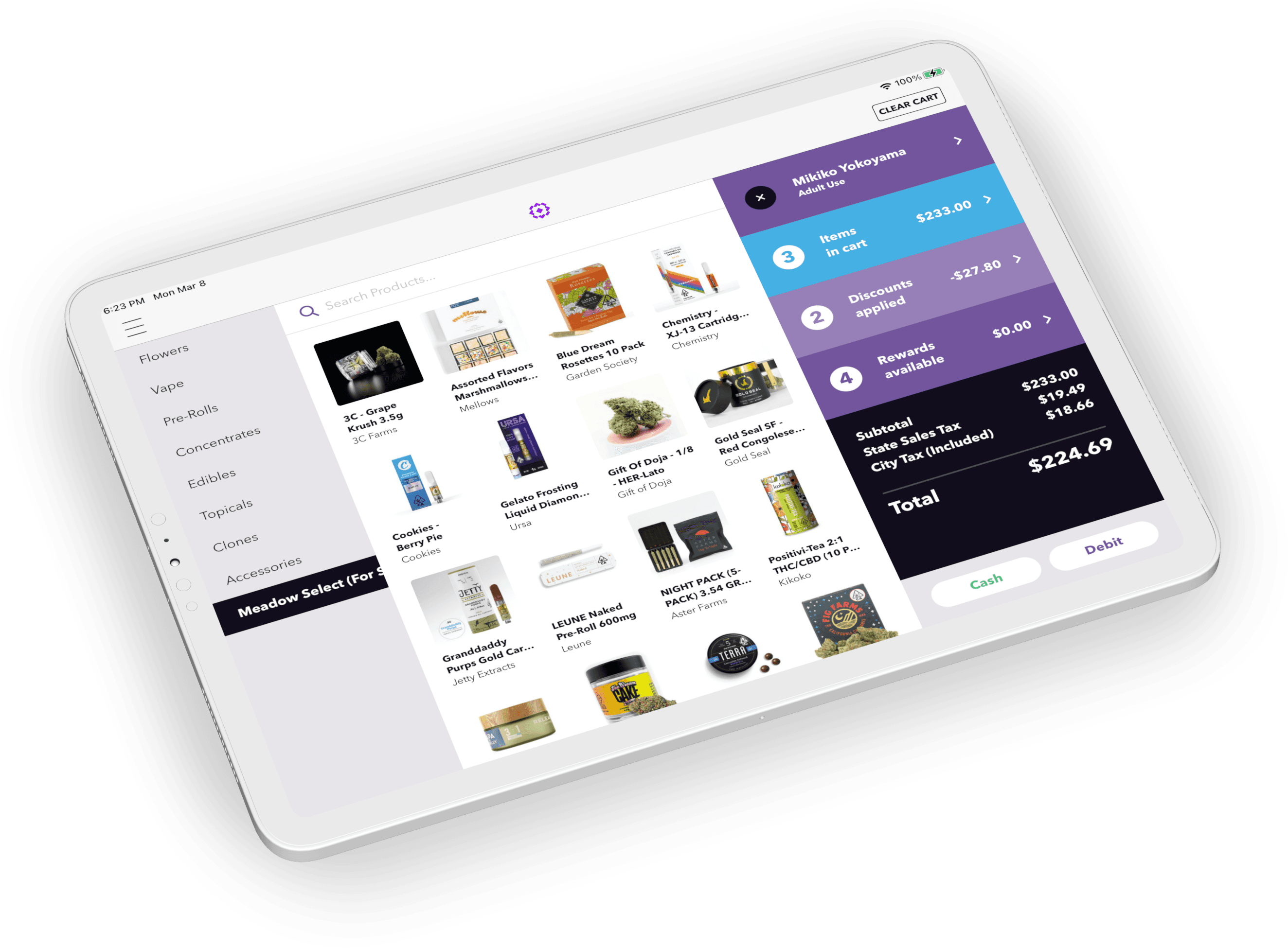
Selecting the right Point of Sale (POS) system is essential for managing your cannabis delivery service efficiently. Key features to look for:
- Ease of use: A user-friendly interface, comprehensive training resources, and responsive customer support get new staff up to speed quickly and reduce retraining costs.
- Automated compliance: Look for a POS that syncs directly with Metrc, automates daily inventory reconciliation, and prevents negative inventory errors, saving time and keeping you audit-ready.
- Built-in text marketing: Drive repeat deliveries by sending targeted SMS campaigns directly from your POS. No separate tool required.
- Reliable performance: High uptime and consistent performance prevent disruptions and keep your operation running smoothly.
- Customizable ecommerce: A seamless connection between your online store and your POS allows for real-time inventory updates and a consistent customer experience across Weedmaps, Leafly, and your own site.
- Mobile-friendly driver app: Your POS should include a mobile-friendly driver app that lets drivers manage orders, verify IDs, track deliveries, and get directions easily. 💡 How Meadow handles this: Meadow is built for cannabis delivery in Metrc states, with native Metrc integration, a web-based driver app requiring no downloads, and real-time inventory sync across every sales channel. See Meadow's delivery features
Creating Delivery Zones
A delivery zone is a defined geographic area where your delivery service operates. When customers input their address on your online menu and fall within a delivery zone, they can proceed to place an order.
In Meadow, you have the flexibility to define your zones by free-hand drawing or importing predefined areas, such as ZIP codes, cities, counties, or tax jurisdictions.

Creating customized delivery zones is essential for efficient cannabis delivery operations. By defining zones to your exact specifications, you can manage taxes, operating hours, and delivery fees, and quickly update delivery time estimates, service areas, and order minimums in response to changes in demand.
Advanced methods for defining and customizing delivery zones:
- Free-hand drawing: Create zones by drawing directly on a map for precise targeting of streets or neighborhoods.
- Import by zip code: Use zip codes as a reference and refine for more precise areas.
- Import by tax jurisdictions: Define zones based on tax jurisdictions for accurate calculations.
- Import by city/county: Create zones based on city or county boundaries to manage different regulations.
- Taxes and operating hours: Set specific tax rates and operating hours for each zone.
- Delivery fees and order minimums: Offer delivery without additional fees for zones closer to your hub, while implementing minimums or fees for zones requiring longer commutes.
- Dynamic adjustments: Adjust delivery time estimates, service zones, and order minimums based on real-time demand and operational needs. Learn more: Drive Sales with Smarter, Faster Cannabis Delivery Software
Launch Your Website
A real-time online menu is the foundation of any cannabis delivery business. Here's what to look for when choosing and setting one up.
Live inventory sync. Your menu should update automatically the moment a product is sold, restocked, or repriced, across your website, Weedmaps, Leafly, and any pickup or delivery channels. A menu that shows out-of-stock products loses customer trust and creates canceled orders.
Mobile-first design. Most cannabis delivery customers order from their phones. Choose a menu solution that loads fast, looks clean on mobile, and makes checkout simple. Page speed affects both conversion and search ranking.
Built-in SEO. Your online menu should generate unique URLs for every product and category page, not load everything through a single iframe. Unique URLs are indexable by search engines and help customers find specific products directly from Google.
Easy integration. Look for a menu that connects to your POS without custom dev work, ideally a single line of code, and syncs inventory automatically so you're not manually managing multiple listings.
💡 How Meadow handles this: Meadow's Menu Pro keeps every menu in sync in real time across all channels, generates unique SEO-friendly URLs for every product page, and deploys with one line of code. See how Menu Pro works
Boost Efficiency with API Integrations
API integrations are essential for maximizing efficiency and streamlining operations. Meadow's platform enables seamless data synchronization across your tech stack, eliminating manual data entry and minimizing errors. Whether you're starting with a fully integrated system or adding services as your business grows, Meadow's integrations automate previously labor-intensive processes. Learn more about Meadow's API Integration Partners.
Meadow + Onfleet for Smarter Cannabis Delivery Logistics
Meadow's two-way Onfleet integration streamlines dispatch, optimizes routes using live traffic data, and lets you track driver locations in real time.
Best Practices
Hire and Train Your Team
Your delivery team is your brand on the road. Prioritize candidates with clean driving records, valid licenses, and solid references. Conduct thorough background checks before bringing anyone on.
- Hire qualified drivers: Look for candidates with experience, clean driving records, and valid licenses.
- Invest in training: Meadow offers Meadow Mastery, free cannabis retail courses tailored to delivery operations, making the training process simple and effective.
- Employee ID cards: All cannabis employees must obtain a CRC-issued Employee ID card before their first day. Build this into your onboarding timeline. Read more: Budtender Training Best Practices for Your Dispensary
Inventory Management
Once your license and compliance are in place, the next step is ensuring you have the right inventory to launch successfully.
- Create informed purchase orders: Research and stock top products popular in your area.
- Start with realistic projections: Avoid over-ordering initially. Order only what you can project will sell.
- Monitor sales trends: Track which products are popular and adjust inventory accordingly.
- Use reports and insights: Leverage sales data to guide purchasing decisions and optimize stock levels.
- Adjust inventory levels: Continuously adjust based on sales trends to maintain a balanced stock.
- Real-time inventory auditing: Cycle count functionality ensures accurate auditing, reduces theft risk, and maintains alignment between physical inventory and your POS system, essential for Metrc compliance. Learn more about Dispensary Inventory Management on the Meadow Blog

End-of-Day Reconciliation
- Track orders by payment type: View daily totals by payment method to match collected funds with recorded sales.
- Driver-level reporting: Filter sales reports by driver to review daily performance and catch discrepancies.
- Shift-based summaries: Organize reports by shift or employee to identify when and where issues occurred.
- Simplified daily reports: Use single-day summaries for a quick snapshot of all orders fulfilled, broken down by payment type, driver, and location.
- Use auditable, flexible systems: Choose tools that let you customize closeout workflows for your reconciliation process.
Operational Pitfalls to Avoid
- Skipping routine inventory checks: Schedule regular cycle counts and verify high-risk products more frequently.
- Giving too much system access: Set clear user roles in your POS and limit edit and discount access to managers.
- Ignoring product movement data: Review sales reports and product velocity weekly to guide reorders.
- Failing to train for compliance: Train all staff on SOPs for intake, transport, and recordkeeping.
- No loss prevention plan: Create and enforce SOPs for cash handling, inventory storage, and surveillance. ---
Common Questions
What license do I need to start a cannabis delivery service in New Jersey? You need a Class 6 Cannabis Delivery Service license from the New Jersey Cannabis Regulatory Commission (NJCRC). Retailers can also add a delivery license to an existing Class 5 Retailer license. Under 2026 legislation (S4847), Class 5 retailers are authorized to operate up to three locations, subject to CRC approval procedures, which expands the footprint you can serve with a delivery operation. Municipal approval is also required.
Does New Jersey use Metrc for cannabis tracking? Yes. Metrc is New Jersey's official seed-to-sale tracking system for adult-use cannabis, selected by the CRC in January 2022. Every licensed operator must register with and maintain compliance with Metrc. Your POS system should integrate directly with Metrc to automate reporting and reconciliation. (Note: medical-only licensees report sales to a separate patient portal, not Metrc.)
Do all cannabis employees in New Jersey need an ID card? Yes. All cannabis business employees must obtain a Cannabis Business Identification (Employee ID) card from the NJCRC before their first day of work. Your business must initiate this process through the NJ-CRC Licensing Portal by issuing an Agent Job Letter to each prospective hire.
How does municipal approval work for cannabis delivery in New Jersey? Each of New Jersey's 564 municipalities independently decides whether to permit cannabis businesses, including delivery services, to be located within its borders. However, municipalities cannot prevent deliveries to consumers in their jurisdiction under CREAMMA. Before committing to a business location, confirm local approval and compliance with any zoning restrictions.
What is the CRC inspection for cannabis delivery operators? Before launching, NJCRC will inspect your operation to confirm compliance with state regulations. Key focus areas include Metrc setup and inventory accuracy, GPS-equipped vehicles, security protocols, staff training, and recordkeeping. The CRC has intensified enforcement in 2026, including license suspensions and Metrc-based inventory holds for violations. Arrive inspection-ready.
What are the vehicle requirements for New Jersey cannabis delivery? All delivery vehicles must be equipped with GPS tracking, use locked enclosed storage for cannabis products, and must not display cannabis-related branding. Vehicles are subject to NJCRC inspection.
What Operators Are Saying About Meadow
- Very responsive, covers all bases for cannabis delivery. — Michael J.
- MEADOW OVER EVERY OTHER POS. I've been using Meadow for the past 2 years and I've also used other POS systems like Treez, and there is no looking back. — Ernesto G.
- Meadow's integration with Metrc has helped solve many problems that our last POS was unable to. — Sami D.
- Meadow's support team is amazing, helpful and you'll never be left hanging. — Victoria F.
- A Godsend for our dispensary. — Mona B. ---
Ready to Launch Cannabis Delivery in New Jersey?
Launching a cannabis delivery service in New Jersey is a real opportunity to tap into a growing market. By meeting the regulatory requirements, building the right operational infrastructure, and using software built for cannabis compliance, you can build a delivery business that's both compliant and customer-focused.
Launching cannabis delivery? Get our setup + SOP checklists here!
Meadow's all-in-one platform simplifies cannabis delivery with tools for Metrc compliance, inventory management, and seamless delivery operations. We've been supporting operators in Metrc states for over a decade.