
Accounting is where dispensaries can quietly lose money. Not always in dramatic ways, but in re-keyed totals that don't match, deductions left on the table, and month-end closes that eat a week someone could have spent running the store. Dispensary accounting, the work of recording, reconciling, and reporting a cannabis retailer's financials, is harder than standard retail bookkeeping for reasons QuickBooks was never built to handle: seed-to-sale inventory, compounding cannabis taxes, heavy cash volume, and 280E cost allocations.
Get it right and your books become an asset: accurate, audit-ready, and honest about what you actually earned and owe. Get it wrong and the errors compound silently until an audit or a tax bill surfaces them. This guide breaks down what makes dispensary accounting different, the four moves that keep any dispensary's books clean, why 280E turns bookkeeping into tax strategy, and how the Meadow x QuickBooks integration powered by Alembic removes the manual re-entry steps.
In This Post
- Why Dispensary Accounting Is Different
- How to Keep Your Dispensary Books Clean
- 280E: Why Clean Books Are Tax Strategy
- How the Meadow and Alembic Integration Works
- Common Questions

Why Dispensary Accounting Is Different
A dispensary's books have to absorb complexity that generic retail bookkeeping never sees. Sales flow through multiple payment types (cash, debit, ACH), each needing its own reconciliation path. Taxes stack in cannabis-specific layers that change by state and sometimes mid-year. Inventory is tracked seed-to-sale for regulators, and under IRS Code Section 280E, cost of goods sold is the main deduction lever an adult-use retailer has, so COGS records need to be precise and defensible.
QuickBooks alone doesn't know any of that. It's an excellent general ledger, but it has no native concept of a cannabis excise tax or a Metrc-tracked SKU. That gap is why so many dispensaries end up with a monthly ritual of report exports and manual journal entries, and why the close time slips from days into weeks.
The good news: clean dispensary books come from a repeatable workflow, not a heroic month-end scramble. The four moves below work whether you run them by hand or automate them.
How to Keep Your Dispensary Books Clean
1. Map a Cannabis-Specific Chart of Accounts
A generic retail chart of accounts collapses everything into "Sales" and "Sales Tax," which makes cannabis reconciliation impossible. Build separate accounts for each tax layer your state imposes and each payment type you accept (cash, debit, ACH). Cannabis tax structure varies by state, so check your own jurisdiction's requirements, but the principle holds everywhere: when every dollar has its own account, a mismatch shows up in exactly one place, so you know which tax or payment type to fix instead of combing through a month of transactions.
What to do this week: List every tax line and payment type on one day's closing report. Check where each one lands in QuickBooks. If two or more are being recorded into the same account, give each its own.
💡 The Meadow x Alembic advantage: Meadow captures every sale, tax line, and payment type at the register, and the Alembic connector delivers them to QuickBooks already broken out by layer, so nothing gets untangled by hand at close. Why an integrated cannabis POS is essential for compliance →
2. Reconcile Daily, Not Monthly
The manual approach works like this: at month end, someone exports POS sales reports, re-keys totals into QuickBooks as journal entries, then hunts down every mismatch between the register, the bank deposits, and the ledger. It works, but it costs hours, depends on memory, and a transcription error made on the 3rd hides until the 30th.
What scales is a daily rhythm: post each day's summarized activity to the ledger while the day is still fresh, and match POS totals against bank deposits and processor records on a short cycle. A one-day-old discrepancy takes minutes to trace. A three-week-old one takes an afternoon. For the inventory side of the same discipline, see Metrc Reconciliation for Dispensaries.
What to do this week: Time your last monthly close. Count the hours spent exporting, re-keying, and correcting. That number is your baseline and your business case for changing the workflow.
💡 The Meadow x Alembic advantage: The Alembic connector turns Meadow's POS activity into summarized QuickBooks transactions on your chosen cadence, without anyone re-typing a number. Run it daily and you get the short-cycle rhythm above with none of the manual entry or transcription errors.
3. Document COGS Like an Auditor Is Watching
Cost of goods sold is where dispensary accounting earns or loses real money. Every purchase order should trace cleanly from the vendor bill to the received inventory to the ledger entry. Incomplete or reconstructed COGS records are the first thing a cannabis-experienced CPA, a bank, or an auditor will flag, and for operators still subject to 280E they can inflate your tax bill (more on that in the 280E section below).
What to do this week: Pull your three largest purchase orders from last month and trace each one from PO to bill to ledger. Any breaks in that chain are what you fix first.
💡 The Meadow x Alembic advantage: The connector uses Meadow purchase order data to create QuickBooks vendors and bills, keeping payables aligned with what actually arrived at the store.
4. Track the Numbers That Prove Your Books Are Clean
Review these monthly; each should trend down or hold steady:
- Days to close the month. With a daily posting rhythm, closes should take days, not weeks.
- Unreconciled variance between POS totals and the QuickBooks ledger. The target is zero; any gap points to a payment type or tax line that needs attention.
- Audit-prep hours. Time spent assembling records for your CPA, bank, or an audit should drop sharply once records stop being reconstructed after the fact. For a deeper look at what auditors ask for, see Navigating Audit Season: Tax Insights for CA Cannabis Retailers. What to do this week: Write down all three numbers for your most recent close, even if they're ugly. You can't improve a baseline you never measured.
280E: Why Clean Books Are Tax Strategy
For the operators 280E still applies to, accounting accuracy directly shapes your tax bill. 280E limits deductions to cost of goods sold, which makes COGS allocation the single biggest tax lever those operators have. A COGS dollar you can document and defend reduces taxable income; a COGS dollar you can't is a deduction you forfeit. Reconstructed records at year end forfeit them by the handful, which is why clean daily data is the cheapest tax help a dispensary can buy.
As of 2026, application of 280E is in the process of changing, and the change makes clean books even more important for some operators. As of the writing of this article, Federal rescheduling has split cannabis into two tax situations. In an April 23, 2026 order, the DOJ moved state-licensed medical cannabis to Schedule III, and as of the 2026 tax year 280E no longer applies to qualifying medical operators. Adult-use cannabis remains Schedule I, and 280E still applies to it; a separate DEA administrative hearing on broader rescheduling, which covers adult-use, concluded on July 15, 2026 with the administrative law judge's recommendation to the DEA still pending, and any resulting rule remains subject to legal challenge.
For operators running both medical and adult-use, the two product lines now sit under different Federal tax treatment, and the IRS has yet to issue expense-allocation guidance for mixed operators, which makes precise, defensible COGS records the difference between a clean allocation and an audit exposure.
Confirm your current status and any allocation approach with a cannabis CPA. For what rescheduling means for retailers, see Schedule III Cannabis: What Dispensaries Need to Know in 2026.
How the Meadow and Alembic Integration Works
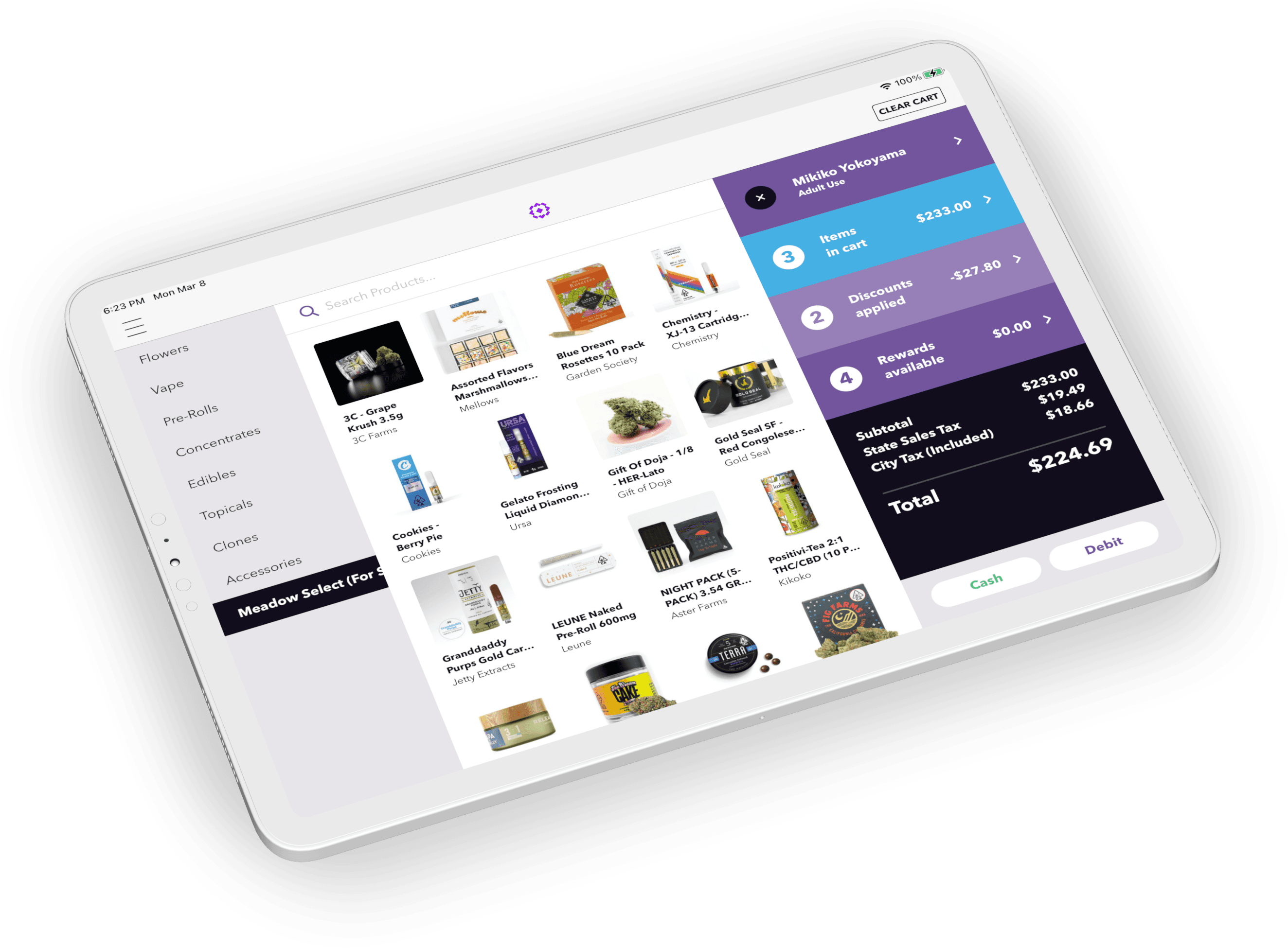
You already run Meadow at the register and QuickBooks in the back office. The Alembic connector sits between them, so the four moves above stop relying on someone finding time to do them by hand. Staying consistent is the part that slips when the store gets busy, and entering every number correctly is the part no one can guarantee manually. The connector removes those manual steps, so the routine holds itself and a mistyped total never gets entered in the first place.
About Alembic. Alembic Computer Services (ACSI) is an accounting-software firm that builds POS-to-accounting connectors for cannabis retail, including the Meadow-to-QuickBooks connector. ACSI joined the Intuit Solution Provider program in 2008 and supports both QuickBooks Desktop and QuickBooks Online.
What syncs. The connector creates summarized transactions in QuickBooks for sales and cost of goods sold, carries tax breakdowns and payment types collected (cash, debit, ACH), and uses Meadow PO data to create QuickBooks vendors and bills. The integration reads data already captured in your POS and does not alter your regulatory submissions; Metrc reporting runs exactly as it does today.
How the sync runs. Once configured, you import your Meadow data into QuickBooks on the cadence that fits your books: daily, weekly, or monthly.
Getting started:
- Connect with Alembic. Reach out through the Meadow x QuickBooks integration page to begin the guided onboarding process.
- Generate Meadow API credentials. Create a secure connection from your Meadow admin panel.
- Start syncing your data to QuickBooks. Import on the cadence that fits your books: daily, weekly, or monthly. Most dispensaries are up and running in just a few days.
It's been great working with the team at Meadow! When it came time to create their API, they came to us to ensure we had access to all the data we needed to create the proper QuickBooks activity. Together we are ensuring the continued accuracy as business, regulatory, and taxation changes arise. Our goal is to provide you with easy to reconcile, audit ready books for your dispensary.
Jeff Sachs, Founder, Alembic Computer Services
At Meadow, we built the platform to be the operational backbone of the dispensary, and accounting is where that pays off: get each sale right at the register once, and QuickBooks and your CPA's workpapers run on accurate numbers, not month-end cleanup.
Common Questions
What is dispensary accounting?
Dispensary accounting is the recording, reconciliation, and reporting of a cannabis retailer's financials, covering multi-layer cannabis taxes, seed-to-sale inventory, heavy cash handling, and 280E cost-of-goods-sold allocation. It differs from standard retail bookkeeping because regulators, banks, and the IRS each demand records that generic ledgers don't produce on their own.
Can a dispensary just use QuickBooks without a connector?
QuickBooks works as the ledger, but it has no native handling for cannabis-specific taxes, seed-to-sale inventory, or high-volume compliance-sensitive sales data. Without a connector, someone has to export POS reports and re-key them, which is slow and error-prone. A connector like Alembic's syncs sales, COGS, taxes, and vendor bills into QuickBooks without re-entry.
What data syncs from Meadow to QuickBooks?
Sales totals, purchase orders, tax breakdowns, and payment types collected (cash, debit, ACH) sync as summarized transactions on your chosen cadence, and Meadow PO data creates QuickBooks vendors and bills.
Does the integration work with QuickBooks Online?
Yes. Alembic maintains versions of the connector for both QuickBooks Desktop and QuickBooks Online.
Does this help with 280E?
For operators still subject to 280E, cleaner COGS records make cost allocation easier to document and defend. As of the writing of this article, 280E no longer applies to state-licensed medical cannabis, but it still applies to adult-use, and mixed operators now face split treatment awaiting IRS allocation guidance. 280E treatment is a tax-strategy question for a cannabis-experienced CPA; this integration improves the records, your CPA determines the allocations.
Close the Books Without the Late Nights
Your POS already knows what happened today. Your ledger should too, without anyone re-typing it. As Y Combinator's first cannabis startup, Meadow has been building the operational backbone for cannabis retail since 2014, with over $4 billion in orders processed and a #1 rating on G2, and the QuickBooks integration powered by Alembic takes the manual re-entry off your team's plate.
Explore the Meadow x QuickBooks integration, or Book a Call to Learn More.