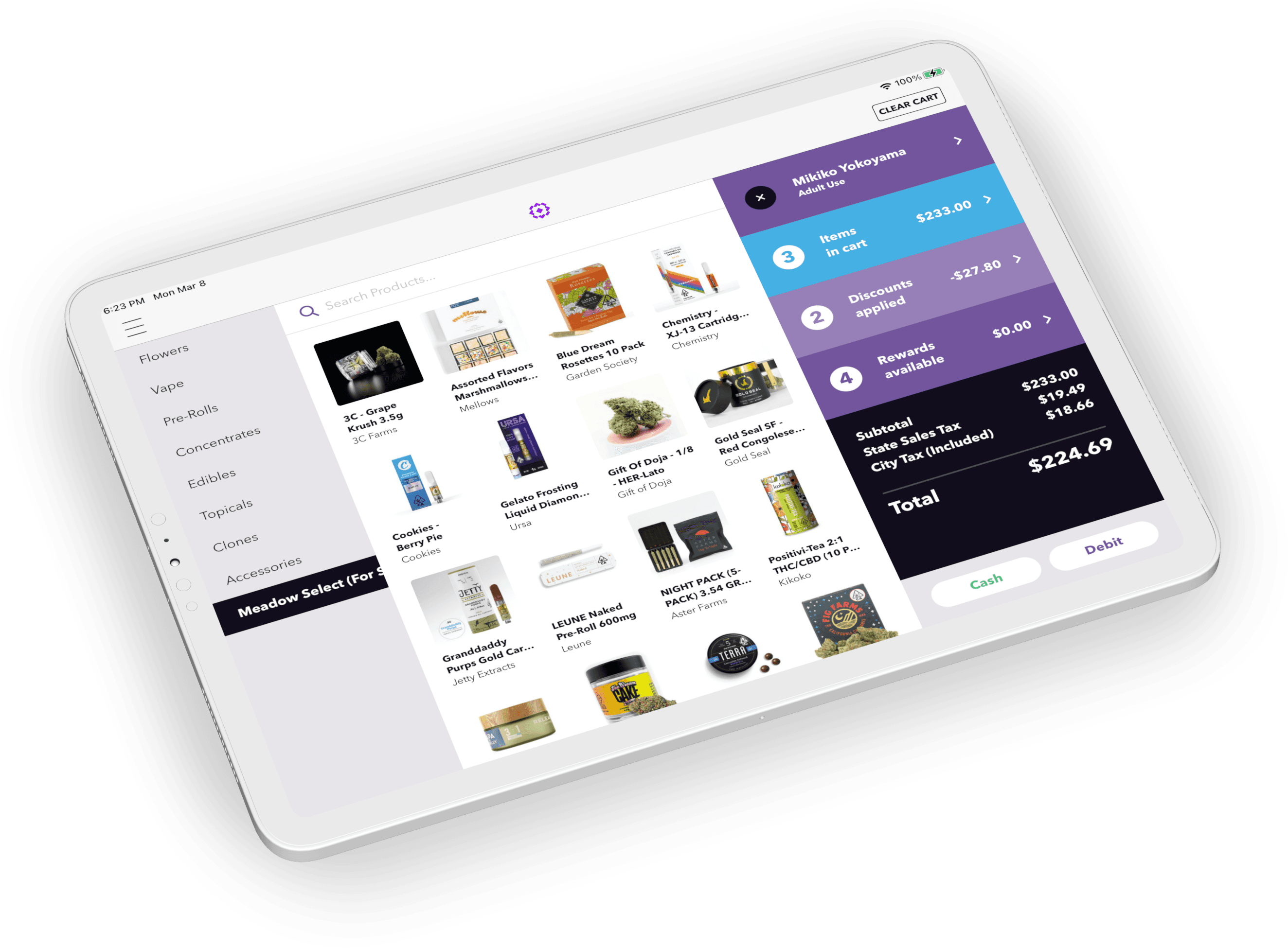

Ice Cream Truck delivery, also called Dynamic Delivery, turns a licensed delivery vehicle into a roaming mini dispensary: the vehicle carries its own inventory, runs its own live menu, and fulfills orders placed within its delivery zone without returning to the storefront. For cannabis retailers, the revenue case comes down to three things: less dispatch labor, a wider serviceable area, and a new way to sell at local events.
This article breaks down all three plays so you can decide where Dynamic Delivery fits in your operation. It assumes you already know what the model is and want to know what it earns. Newer to delivery altogether? Start with our complete guide to cannabis delivery. If you're evaluating the Ice Cream Truck model specifically for the first time, our step-by-step guide to launching Ice Cream Truck delivery covers legality, licensing, vehicle requirements, staffing, and workflows. This piece picks up where that one leaves off: how the model makes money.
In This Post
- Play 1: Eliminate the Time, Cost, and Labor of Manual Dispatching
- Play 2: Reach Underserved Customers and Expand Your Reach
- Play 3: Serve Local Events with Onsite Sales
- Why Meadow for Dynamic Delivery?
- Common Questions About Dynamic Delivery Revenue

Play 1: Eliminate the Time, Cost, and Labor of Manual Dispatching
Dynamic Delivery cuts dispatch labor by removing the round trip. Vehicles operate as independent inventory locations with their own product mix, online menus, and real-time order messaging. When an order is placed in a vehicle's zone, it can be dispatched and fulfilled directly from the vehicle, with no trip back to a storefront or inventory hub.
Where the efficiency gains come from:
Your Vehicle Acts as an Independent Inventory Location
Stocking inventory in the vehicle takes the return trip out of the fulfillment loop. Drivers fulfill orders where they already are, which shortens routes and cuts fuel spend. When Meadow launched Dynamic Delivery in 2021, TechCrunch reported that Cannable, a retailer and delivery service in Parlier, California, cut delivery times from hours to 20 minutes on the model. Shorter drops mean more deliveries per shift and more revenue out of the same labor hour.
Carry Your Top Sellers for Customized Product Offerings
Each vehicle can be stocked with a tailored selection based on what actually sells in the area it serves. Use your point of sale system's reporting and analytics to load best sellers into the vehicle, then adjust the mix by zone as demand patterns show up in the data. Matching what's on board to the neighborhood improves fill rate and keeps slow movers off the truck. For the loading and restocking mechanics, see the inventory and restocking section of our launch guide.
Automated Dispatch and Order Fulfillment
Orders placed inside a vehicle's designated zone are dispatched automatically. Once a customer completes a purchase, a task is autogenerated in Onfleet and auto-assigned when there's a single driver in the region. Your dispatcher stops hand-assigning tasks, and removing the manual step removes a common source of mis-assigned orders. Meadow co-founder David Hua described the mechanism to TechCrunch at launch: a retailer draws a zone with a single driver in it, and every order placed on that vehicle's menu routes to that driver automatically. The effect, in his words, is "taking the labor down significantly."
Free Up Labor for Revenue-Generating Work
Automating dispatch and fulfillment returns hours that were going to coordination. That capacity moves to work that grows the business: marketing, customer service, and building the repeat-order base that makes delivery profitable.
💡 How Meadow handles this: Every in-vehicle sale syncs to your inventory and compliance reporting automatically, so running sales out of a vehicle doesn't add a reconciliation step at the end of the shift. See Meadow's cannabis delivery tools →
Play 2: Reach Underserved Customers and Expand Your Reach
Customizable delivery zones let you serve areas a hub-and-spoke model can't reach profitably. Zones can be drawn to exact specifications, as large or as small as a retailer likes, so you can target the entire next county over or just a few key zip codes farther out than you'd serve from the store. Drivers can roam new regions with product ready to sell. That means you can promote your business in adjacent areas, serve a wider segment with decentralized inventory, and bring fast delivery to customers who may not be used to ordering cannabis to their homes at all.
Customize Your Operations
Zones in Meadow come with advanced settings for further customization. Zones close to your shop can offer delivery with no added fees, while zones requiring longer driver commutes can carry minimum order requirements or delivery fees. As operations expand across localities, you can set specific tax rates to ensure accurate taxation for each delivery location.
If your delivery radius stops where a driver can still make it back to the store, the model is what's capping it. Meadow's zone and vehicle setup is built for operators expanding past that line. Book a Call to Learn More
Play 3: Serve Local Events with Onsite Sales
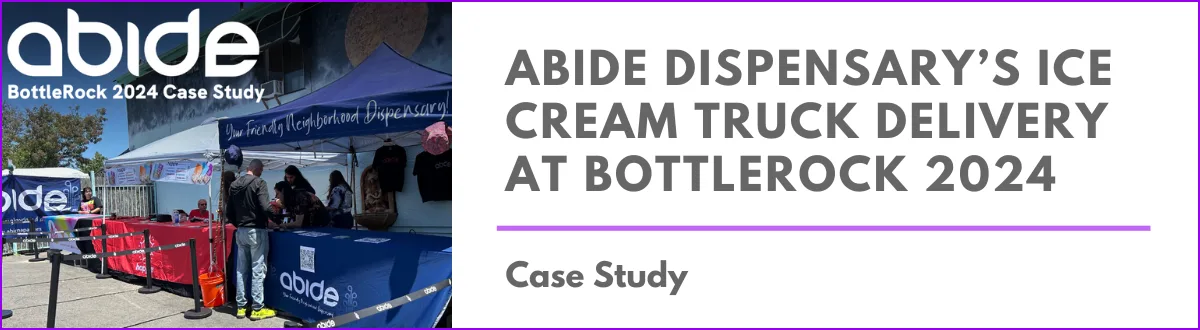
Dynamic Delivery gives retailers a compliant way to sell at events without the costs and red tape of an event license, where regulations allow. Partner with venues or brick-and-mortar businesses like hotels to set up a kiosk with a menu and a dedicated delivery vehicle: create a single-location delivery zone, stock the vehicle with grab-and-go products, and add signage encouraging guests to order online and pick up at a designated delivery area. The model works anywhere from a stadium to a nearby festival. Event rules vary by state and municipality and change often, so confirm what's allowed in your jurisdiction before selling at any event.
For a real-world example, see how Abide ran Ice Cream Truck delivery at BottleRock:
Why Meadow for Dynamic Delivery?
Meadow launched Dynamic Delivery in California in November 2021, and TechCrunch covered it at the time as a new way to bring mobile dispensaries to the state. The model runs on the same stack as Meadow's dispensary POS software, which keeps sales, inventory, loyalty, analytics, delivery, eCommerce, CRM, and compliance in one system. Going from one vehicle to a fleet doesn't mean adding another tool to reconcile.
The cost of operating a single Dynamic Delivery vehicle is included in Meadow's cannabis retail packages, making it a low-cost way to test the model before expanding your fleet.
🚚 Launching or scaling delivery? Download our Cannabis Delivery Checklist for everything you need to launch and stay compliant.
Common Questions About Dynamic Delivery Revenue
Is Dynamic Delivery profitable for a single dispensary?
It can be, and the economics turn on three levers: dispatch labor you stop paying for, revenue from zones you couldn't serve profitably from the store, and event sales you couldn't run without an event license. Because a single vehicle is a small commitment, you can validate the model in one market before expanding the fleet.
How does Dynamic Delivery reduce delivery labor costs?
Orders are automatically dispatched to the vehicle already in the customer's zone, so dispatchers spend less time manually assigning tasks and drivers spend less time driving back to the store. Fewer return trips also mean lower fuel costs and more deliveries completed per shift.
Can Ice Cream Truck delivery help me reach customers outside my current delivery area?
Yes. Because the vehicle carries its own inventory, you can draw zones in adjacent cities, counties, or zip codes that would be unprofitable to serve from your storefront. Zone-level settings like delivery fees and order minimums keep longer routes economical.
Can I use Dynamic Delivery to sell at local events?
In some markets, yes. Create a single-location delivery zone at the venue, stock a vehicle with grab-and-go products, and let guests order online for pickup at a designated delivery area. Rules vary by state and municipality, so confirm what's allowed in your jurisdiction first.
How does in-vehicle inventory stay accurate and compliant?
Each vehicle runs a live menu that reflects what's physically on board. When an item sells, it disappears from the menu and the sale syncs to your inventory and compliance reporting automatically, preventing oversells and reconciliation headaches.
Turn a Vehicle Into a Revenue Channel
One vehicle, one driver, and the right software is all it takes to test Dynamic Delivery in your market. Meadow has been building cannabis retail software since 2014 as Y Combinator's first cannabis startup, and is rated the #1 POS by dispensary operators on G2.